Science Café
Designing products for a circular economy.
Your coffee machine breaks, or your laptop, or your dishwasher. You want to get your device repaired, but it’s not that simple. Sometimes, modern devices are designed in a way that makes them impossible to repair. Or it’s possible, but expensive. Or it could be done, but where do you find a repair technician? In many cases, it’s just more attractive to buy a new device. That isn't very sustainable.
In the past, repairing was common, sometimes even a necessity. Freelance journalist and part-time Amsterdam district administrator Martine Postma came up with the concept of a Repair Café. In October 2009 (already!), the first café launched. The idea was to bring your broken device to a place where handy and experienced people (volunteers) could fix it. There was global interest in this initiative, and there are now around 4,000 Repair Cafés worldwide. Deventer has had one since 2012. But it remains a drop in the ocean regarding the waste of materials and resources. If you truly want to stimulate the reuse of materials and use waste as a resource to achieve a circular, sustainable economy, it requires a different approach to design.
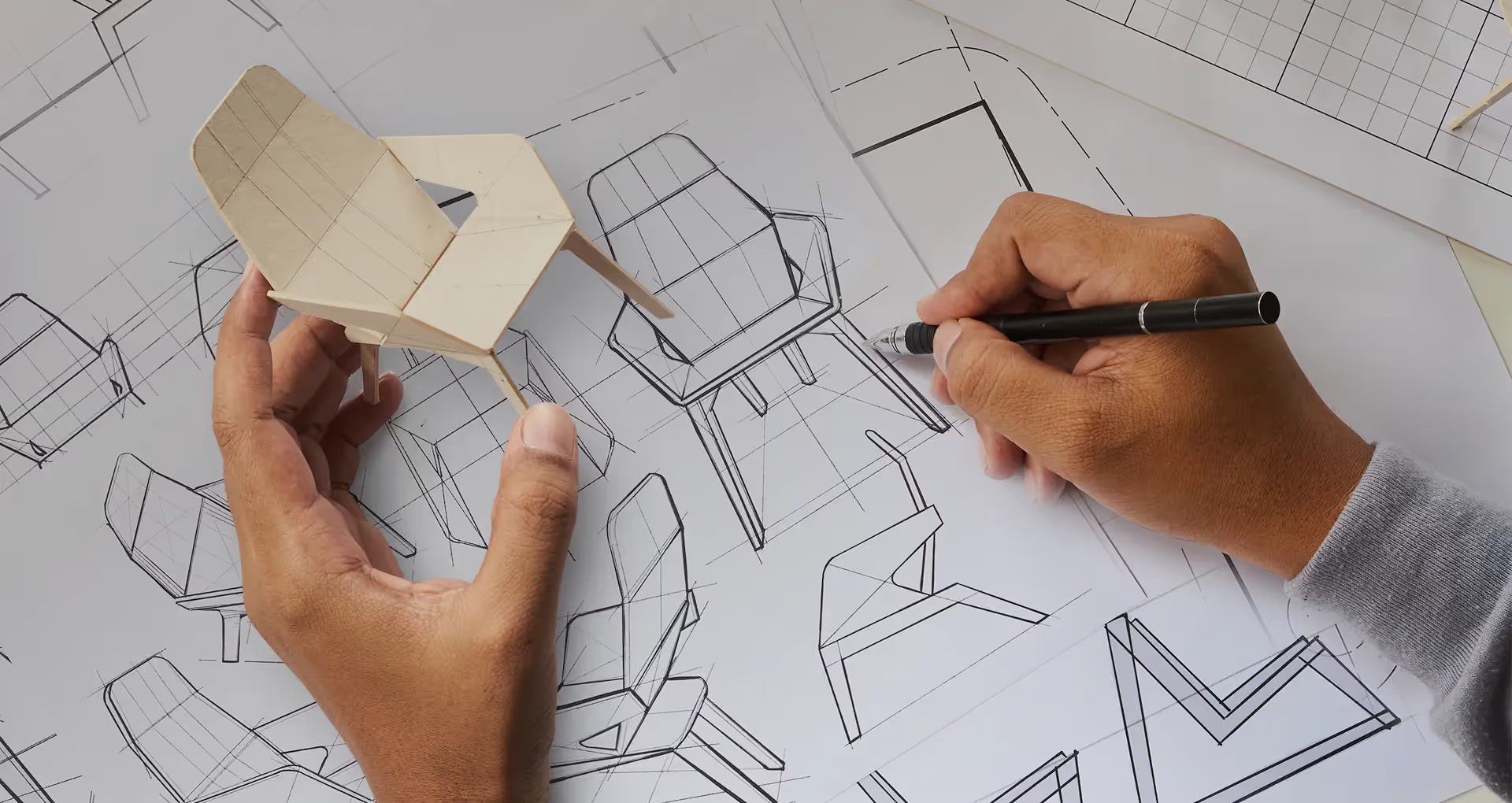
Prof. Conny Bakker, professor at the Faculty of Industrial Design Engineering at Delft University of Technology, and her research group are developing methods and techniques to design products that last longer, are easier to repair, and are ultimately easier to recycle. She will be at the Science Café to talk about her research. Industrial designers received a boost in 2024 when the European Parliament passed the Right to Repair legislation.
Live music will be provided by Dubio, and the moderator is Almar Otten.
