Science Cafe
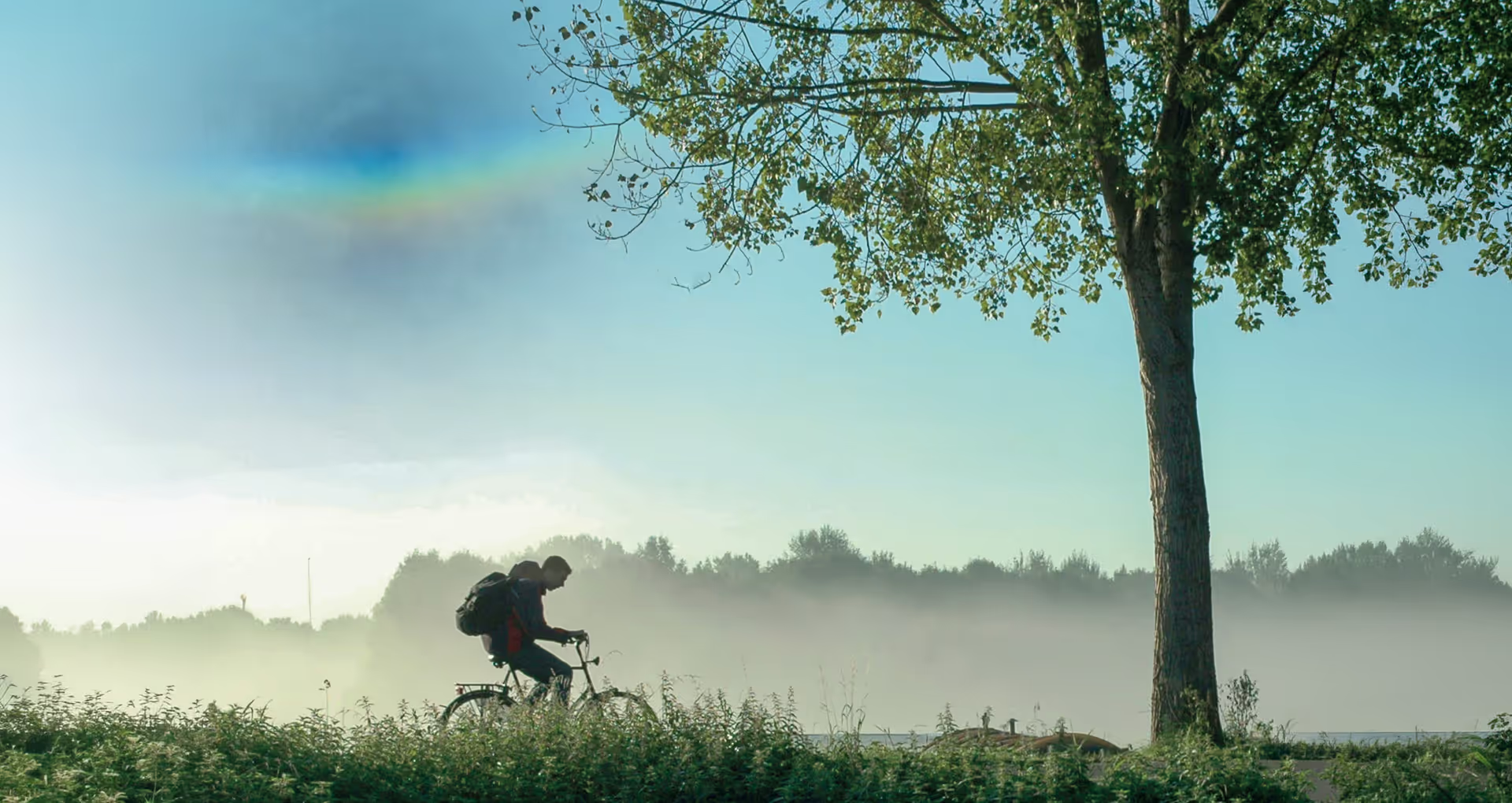
A circle around the moon, the red sky, the rainbow: these are natural phenomena that we have all seen before. But who knows Bishop's ring, Lowitz's arches, the sunset, or the green flash? What is a mirage? And why is it that the sky is blue?
Sixty years of observations of optical phenomena in the Netherlands.
speaker: Peter Paul Hattinga Verschure
As different as they are, all these phenomena have one thing in common: they are celestial phenomena created by the interplay of sunlight and moonlight with particles in the Earth's atmosphere. That is why they are called “optical phenomena”. We see these color effects more than once in old weather spells, because many of these phenomena tell us a little bit more about the weather today and tomorrow. There are all kinds of optical phenomena. Many things are easy to overlook, but we can just see them all with the naked eye. The only thing that helps us get started is knowing how, where and when to watch.
The Netherlands has a long history of observations of these optical phenomena. For more than eighty years, the KNMI has collected, edited and published observations by the public. Just when the KNMI ended this activity in 1965, a generation of young “weather amateurs” began observing optical phenomena and a new observer network was created. Now, sixty years later, this network has built an observation series that is in line with the old KNMI series. In those sixty years, the necessary insights in this area have been updated and phenomena unknown to date have been observed and identified. Deventer Peter Paul Hattinga Verschure is the hub in this network and is the expert in the Netherlands in the field of optical phenomena in the atmosphere. In his lecture, he will not only talk about the many phenomena that can be seen, but also how important the role of the observer and the editor of the observations is.
Optical phenomena in particular appear to be rather sensitive to misinterpretation and subjective speculation. Correctly determining an observed phenomenon requires information, knowledge and a certain amount of experience in this multifaceted field. In addition, a sharp and contemplative observer view, a certain spatial insight and the ability to describe and document the observed phenomenon very precisely are the conditions for careful and verifiable reporting. Conversely, the person who edits provided observations needs the same qualities to correctly interpret those observations that are inevitably always partly subjective in practice for a correct determination of the observed phenomena. This is the only way observational material can be scientifically important.
Peter Paul Hattinga Verschure has been observing, photographing and documenting optical phenomena since his younger years. Since 1972, he has been the collection point of observations in the Netherlands and provides monthly overviews in the Weerspiegel magazine of the Association for Meteorology and Climatology. He has published numerous articles in domestic and foreign magazines. In 2023, he published the book Optical Phenomena in the Netherlands, which contains a complete overview of observations from 1966 to 2020. In 2025, he received the Dr. J. van der Bilt Prize from the Royal Dutch Society for Weather and Astronomy for his complete work on optical phenomena.
Live music is provided by Dubio and moderator is Ilse Roelofsen.
