Dual interview with Kasper Iseger & Freek Ros

Burgerweeshuis is celebrating its 40th anniversary. The building may be showing its age, but the spirit is still very much alive. What defines this renowned Deventer music venue, which grew out of a youth center in 1984? We’re finding out in six double interviews. This is episode 1, featuring lighting designers Freek Ros (Hilversum, 1983) and Kasper Iseger (Wijhe, 1995).
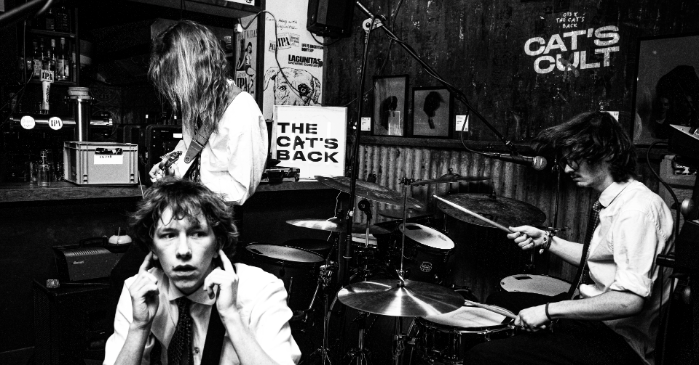
A Monday morning in February. Kasper stands waiting in front of the gate of the Burgerweeshuis on Bagijnenstraat. He looks up; everything looks just as it did ten years ago. Then Freek walks up too. Spotting his former protégé, he stops to take a photo. The caption on Instagram a little later: The Man, The Myth, The Legend.
At Freek’s request, the interview takes place in the Burgercafé. ‘I appreciate a bit of daylight and fresh air right now. I’ve just spent three days with De Staat at De Casino in Sint-Niklaas. We played three different shows, which means setting up and breaking down every day.’ Kasper—just back from Los Angeles, where he did the lighting for SZA at the Grammys—agrees. But first, he wants to take a look inside the main hall.
‘Cool,’ he says when he returns a moment later and sits down at the table. ‘My time here, where I learned so much, flashed by in a few seconds. Standing on scaffolding adjusting lights, running up and down stairs, walking around the ramp in a Burnside suit with Allex and Freek.’
A basic idea, but not a bad one
It’s 2010 when Freek, then head of technical operations at Burgerweeshuis, receives an email from a very young guy from Wijhe. Freek laughs: ‘I don’t remember if you had to be sixteen or eighteen to volunteer here, but he was neither. With the rules we had ourselves, we could have bent them a bit.’ He holds his hands over his eyes. ‘But we had to stick to the labor laws. At eleven o’clock at night, he had to step away from the controls.’
That very young guy was Kasper, and he made an impression on Freek right away. ‘You can tell quickly if someone understands what they’re doing. You can learn the technical side, but explaining to someone what light does to a space is harder.’ To Kasper: ‘I remember asking you before a show: “What should we do tonight?” You walked to the entrance, grabbed the flyer for the evening, and looked at the colors. That’s a basic idea, but not a bad one. If someone has already thought about something, you might as well use that as a starting point. Besides that, you turned out to be a very social guy, which isn’t unimportant. The things that are fun and stay fun are the ones where there’s a personal connection.’
Kasper remembers his early days at the Burgerweeshuis as a warm welcome. ‘I felt welcome and heard from day one. I’m quite eager to learn and ask a lot of questions. Sometimes you let me figure things out for myself, but I never asked too much. I went to Burger every night with a smile on my face.’
Danko Jones, Woven Hand, Madrugada
Freek had a similar experience ten years earlier in Hilversum at the music venue De Tagrijn, now called De Vorstin. Freek: ‘Places like Burger and De Tagrijn grew out of the squatting scene. At some point, they became youth centers, and eventually—after a professionalization phase—music venues. You can see that history in their DNA. Music venues still rely heavily on volunteers. People join for the fun of it, to have a good time.’
When Freek knocked on the door of De Tagrijn at seventeen, he wanted to be ‘close to the music,’ which is how he started doing lighting. ‘I had zero prior knowledge, and absolutely no interest in technology either. Honestly, I still don’t. I wanted to be part of the team, to contribute to great nights.’
A job posting in OOR magazine led him to the Burgerweeshuis in Deventer in 2003. ‘I looked at the program and saw bands I really loved, like Danko Jones, but also Woven Hand and Madrugada. This caliber of artist didn’t come to Hilversum. The Burgerweeshuis was one of the larger venues in the region at the time and a step up from De Tagrijn. There was a vision, both business-wise and artistically. If you gave Rob Kramer, the director at the time, five euros, it would have turned into fifteen by the end of the day.’
His job description? Freek laughs. “Making sure the lights were on when evening fell. I think under the collective labor agreement I fell into the category of caretaker with managerial duties. What was made crystal clear, in any case, was that I shouldn't expect to celebrate New Year's Eve with my friends. Unless they wanted to come to the Burgerweeshuis.”
‘Resourcefully varied lighting’
That was then. Freek now works with artists including De Staat, Jungle by Night, and Altın Gün. He designed the light show for S10’s performance at the Eurovision Song Contest and tours with Wende. The New York Times wrote about the lighting for her latest show: ‘With resourcefully varied lighting by Freek Ros, the 19-song, 100-minute cycle keeps shifting its tone and pace.’ Meanwhile, Kasper travels the world with the biggest names in the industry. He designs light shows for artists like Billie Eilish, SZA, Metro Boomin, and Martin Garrix, which he executes on-site in the largest arenas. He easily clocks a hundred flights a year.
It’s a world of difference. Kasper takes a sip of coffee and says: ‘When I started here, we put plastic filters in front of lamps, which we then adjusted by hand so the guitarist was well-lit. Now, we do everything from our console.’ Freek: ‘The visual aspect of a show has become more important. Artists value it more. We know exactly at what moment in the show people pull out their phones to film.’
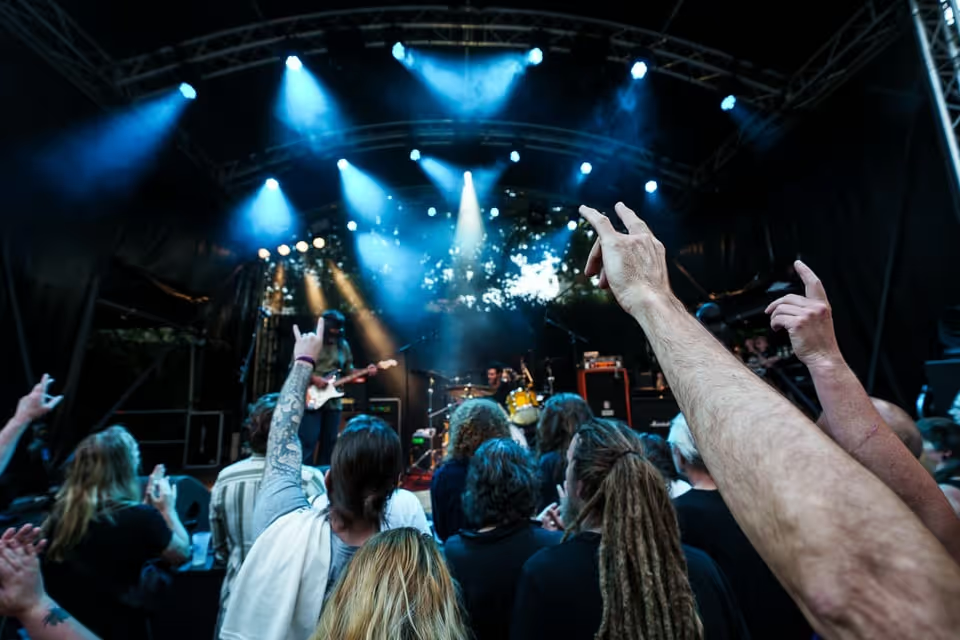
Both have done lighting in the massive Alpha tent at Lowlands. Both have been behind the controls at the Ziggo Dome. And that’s just in the Netherlands. The contrast with the Burgerweeshuis—low ceiling, low stage, dark, small—could hardly be greater. Kasper, pointing toward the hall: ‘The audience here is in very direct contact with the light and the band. A venue like Hedon is three times as high.’ Freek: ‘Every plan you make as a lighting designer, for any band or show, has to be adapted for the Burgerweeshuis. But you can always make something of it. We played here recently with De Staat. That was one of the most fun shows in a long time, because of the audience, the warmth, and the sweat.’
The ability to be uncompromising
After a work placement, Kasper stayed on as a volunteer at the Burgerweeshuis. That period, from 2010 to 2014, shaped him into who he is today. "I learned how to work together to get the absolute most out of an evening. Whether I'm doing lighting for Billie Eilish at Coachella or for Paceshifters at Burger, the goal is the same." Freek adds: "Developing talent, whether it's a technician, director, or musician, stands or falls with a sanctuary where things are possible. You have to design the lighting yourself to really learn it. A theater is a completely different place in that respect; they open the door and give you a blank canvas. That’s not where performances are born."
The S-word has been dropped. Neither Freek nor Kasper sees any merit in the plan to house the Burgerweeshuis within the Schouwburg. Kasper: "I’m afraid Burger will lose its heart and soul. You can see it with Tivoli, which merged with Vredenburg. A lot of creativity was lost there. It would be a shame if that happened here too. I want all future interns and volunteers to have the same autonomous and welcoming environment that I had." Freek: "To create something beautiful, you have to be able to be uncompromising."
In 2022, after nineteen years, Freek said goodbye to the Burgerweeshuis. It was a difficult decision he agonized over for a long time. He would have liked to help design a new venue, but the process took too long for him. "In my view, the process is being handled carelessly and with too little vision. The quality of the city council isn't exactly shining through." There is no doubt among the lighting designers about the need for renewal and progress. Kasper: "When I was touring with bands in the Netherlands, we never went to the Burgerweeshuis. In the east, the destination was Hedon or Metropool. The industry is changing—not just the lighting, but the entire scale of productions." Freek: "I feel the warmth and love coming here, but the moment of throwing the baby out with the bathwater has actually already passed."
And yet, as long as the Burgerweeshuis has its place on the Bagijnenstraat, he will continue to encourage the bands he tours with to play a show there. What does he tell them? "I don't have to say anything; this venue has a great reputation. You find purists and enthusiasts here, and they’re right up against the stage, too. Burger is a great setting to try things out. We’ll be here soon with Wende. I won't tell them in advance that the lighting rig we're bringing doesn't fit. They'll find that out for themselves."
Photography: Isabelle Renate la Poutré
Interview: Job Hulsman